
Best Practice
From first case to benchmark: Five uRDN cases in one day
June 16, 2026
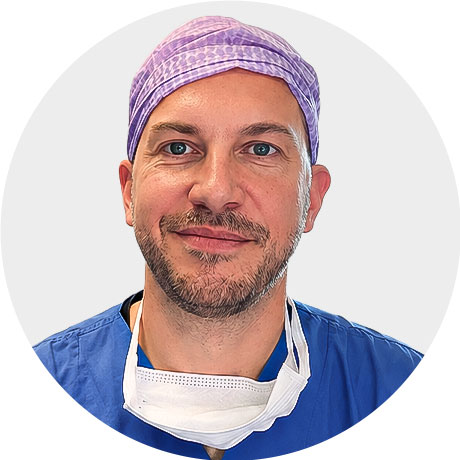
Dr. Robert Höllriegel`s perspective on Ease of Use, Learning Curve, Safety, and Effectiveness of the Paradise Ultrasound Renal Denervation System.
Over the last years, I have incorporated the Paradise ultrasound renal denervation system into my clinical practice in the Heart Center in Dresden. Based on my own hands-on experience, as well as training and proctoring colleagues, the system represents a valuable treatment option for hypertension in terms of procedural simplicity, safety, and scalability.
Ease of Use
From the first case onward, the system distinguishes itself by its intuitive design and standardized workflow. Catheter preparation, system setup, balloon positioning, and sonication steps are logically structured and well supported by the system interface. Compared with other renal denervation systems, there is less dependency on operator-specific skills.
Once the renal artery anatomy is suitable, positioning the balloon catheter and delivering circumferential ultrasound energy is straightforward. The automated nature of the sonication and cooling process reduces cognitive load during the procedure and allows the operator to focus fully on positioning and patient monitoring.
Learning Curve
The learning curve with the Paradise system is genuinely short. In my own experience, confidence increased markedly with the second procedure. This matches daily clinical reality: once the workflow has been performed once, the second case feels familiar rather than experimental.
This observation is directionally consistent with the US multicenter data presented at CRT 2026, where 51 physicians performed two cases and showed a significant reduction in average procedure time from approximately 67 minutes in the first case to around 45 minutes in the second.1 The decreasing variability between first and second cases also suggests growing procedural confidence.
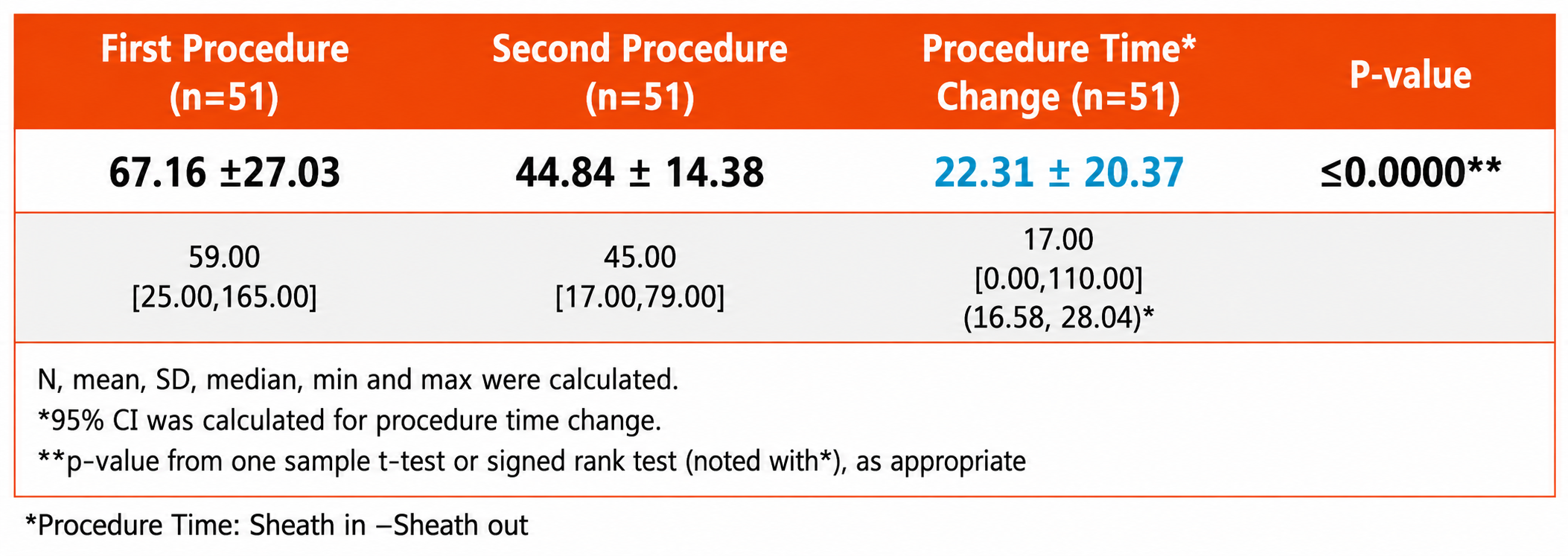
However, from a critical standpoint, these data must be interpreted with caution. Two procedures per physician are insufficient to fully characterize a learning curve, especially for an intervention that is highly dependent on renal artery anatomy. Procedure time is not solely a function of operator experience—it is strongly influenced by factors such as vessel length, diameter, tortuosity, branching patterns, and access conditions. It is therefore possible that part of the observed reduction in time reflects anatomical differences between cases rather than pure learning effects.
That said, even when accounting for this limitation, the US experience aligns well with what we observe in my center: the system is easy enough that confidence comes very quickly, and a second procedure already feels routine.
In daily practice, procedure duration varies substantially depending on anatomy. In patients with favorable renal artery anatomy, the procedure can indeed be performed very quickly—well within the timeframes reported in the US analysis. In contrast, complex or borderline anatomies naturally extend procedure time, regardless of operator experience.
Overall Assessment and Future Outlook
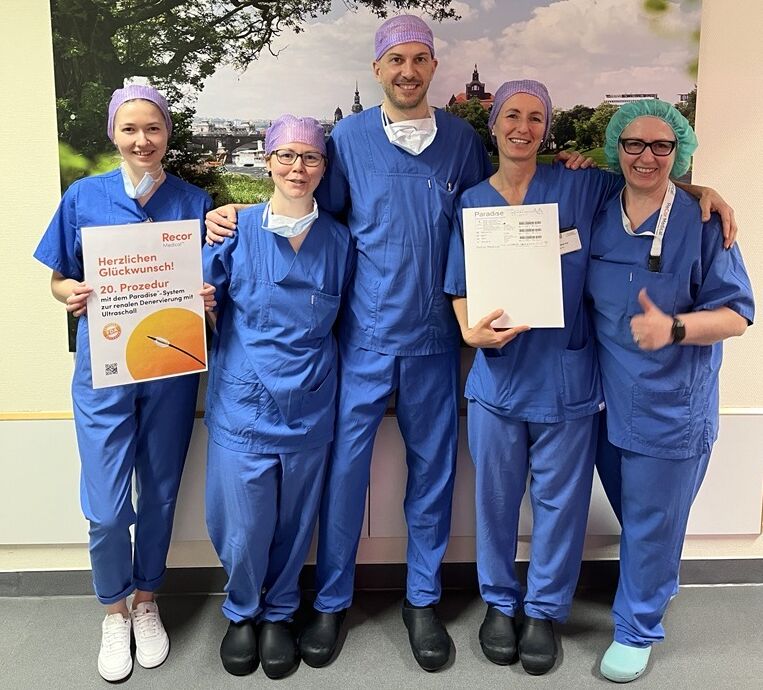
In this experience report by Dr. Höllriegel, a noteworthy milestone in his clinical practice has been the performance of five ultrasound renal denervation (uRDN) procedures within a single day: “A noteworthy milestone in my own clinical experience has been the performance of five ultrasound renal denervation (uRDN) procedures within a single day. To the best of my knowledge, this represents a first worldwide. At the same time, I view this milestone not as an endpoint, but as part of an ongoing development in the field. With growing experience and continued optimization of workflows, I am genuinely interested to see when this benchmark will be exceeded. This achievement highlights not only the efficiency of the Paradise system but also its suitability for integration into routine clinical practice at higher procedural volumes without compromising safety or quality. Such progress will ultimately serve as a testament to the maturation and broader adoption of uRDN in the treatment of hypertension.”
Source:
- Adapted from CRT 2026, Real-world, Multicenter Procedural Insights from First Time Users of The Paradise Ultrasound Renal Denervation System, by Dr. Brian Brown, Spartanburg Healthcare System
December 10, 2025
This article is about the experience of how Dr. Ivan Javier Núñez-Gil built a successful uRDN Program in Spain. It is a powerful example for physicians and institutions looking to innovate and offer patients the latest therapeutic alternatives.
September 22, 2025
Renal denervation is gaining traction as a powerful tool in hypertension management—but it's not for everyone. Discover how ESC and ESH guidelines, clinical evidence, and practical tools like the Recor Medical selection form help identify the right candidates.
June 26, 2025
In this article, Professor Joachim Weil explores the pivotal role of patient empowerment in the context of renal denervation for treatment-resistant hypertension.