Best Practice
Building an Ultrasound Renal Denervation (uRDN) Program from Scratch in Spain
December 10, 2025
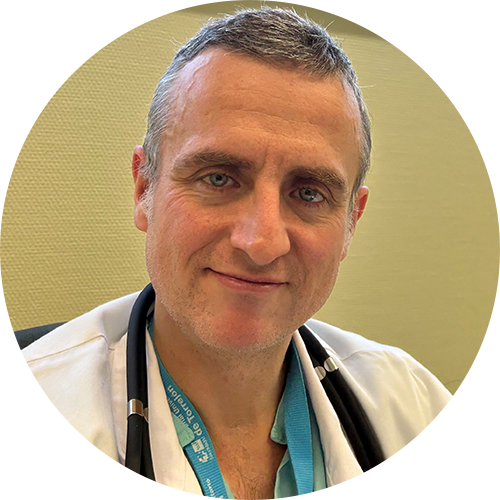
This article is about the experience of how Dr. Ivan Javier Núñez-Gil built a successful uRDN Program in Spain. It is a powerful example for physicians and institutions looking to innovate and offer patients the latest therapeutic alternatives.
A uRDN program and its impact for patients
“In routine practice we still see many patients with uncontrolled hypertension despite multiple medications and lifestyle measures. Some are truly resistant; others are intolerant or poorly adherent because of side effects or pill burden. Renal denervation (RDN) offers a durable, anatomy-based adjunct that does not depend on daily adherence. The ultrasound system appealed to me because it delivers a circumferential, consistent ablation with a short learning curve and predictable workflow—features that translate well to a busy cath lab environment.“ Dr. Núñez-Gil explains about the intend of the project.
„Our goal was simple: reduce blood pressure safely, sustainably, and with minimal disruption to patients’ lives.” – Dr. Ivan Javier Núñez-Gil.
Dr. Núñez followed a structured approach in implementing the uRDN Program, starting with a concise business case and developing two coordinated pillars: a Hypertension Unit for selection and follow up; an Interventional suite for execution.
The Business Case: hospital administration approval
The business case was developed to gain support from hospital leadership and administration, and it focused on:
- the unmet clinical need;
- the evidence base and safety data;
- expected procedure volumes;
- a clear multidisciplinary pathway;
- budget impact with realistic timelines.
Guidelines used: European hypertension guidelines, a nationally published expert consensus in which he actively participated, and a recent meta-analysis on ultrasound based renal denervation conducted by him and his colleagues.
Program Set up & Logistics
Program Set up: Hypertension Unit & Interventional suite personnel
To establish the uRDN program, Dr. Núñez developed two coordinated pillars:
- Hypertension Unit (patient selection & follow-up):
- Cardiology and Nephrology leads (joint clinic/board).
- Hypertension clinic nurses (ABPM, education, adherence checks).
- Medication reconciliation and secondary-causes screening.
- Structured follow-up schedule (i.e. 3, 6, 12 months with ABPM and office BP).
- Interventional suite personnel (procedure execution):
- Interventional cardiologist (primary operator).
- Cath lab scrub nurse and circulating nurse/technician.
- Anesthesiology (recommended but not mandatory) for comfort and hemodynamic stability.
- Recovery nurse for immediate post-procedure monitoring.
Logistics and Key Components for Program Launch:
- Technology & imaging:
- Ultrasound RDN console and catheters.
- Standard renal angiography setup (guides, wires, hemodynamic monitoring).
- Access to imaging support when needed (renal CTA/duplex).
- Cath lab access:
- A protected half-day slot at start, scalable with volumes.
- Pre-procedural checklist and same-day or short-stay recovery pathway.
- Data & quality infrastructure:
- Prospective registry, adverse-event surveillance, and periodic audits to drive continuous improvement.
The multidisciplinary collaboration & patient identification
Dr. Núñez created a shared referral pathway to identify uRDN candidates, bringing together key specialties with common tools, clear processes, and unified criteria to ensure fair, evidence-based patient selection.
The referral structure pathway
- Single front-door referral form: shared with Cardiology, Nephrology, Primary Care, and Internal Medicine.
- Periodic virtual board: to review candidates and ensure consistency and shared ownership.
The criteria to identify eligible patients and the alignment across specialties
- Criteria to identify eligible patients: adults with uncontrolled or resistant hypertension despite guideline-directed therapy and lifestyle optimization, suitable renal anatomy, and no exclusionary secondary causes.
- Uniform thresholds based on ABPM: to ensure consistent criteria for diagnosis.
- Medication reconciliation to address pseudo-resistance: to ensure patient is truly resistant.
- Stakeholder living protocol: a regularly updated document used to codify shared agreements and accessible to all stakeholders involved in the program.
Training & Education: vendor’s training, peer-to-peer proctorship & in-service sessions
Dr. Núñez combined vendor-supported device training with peer-to-peer proctorship and simulation to build procedural expertise. His prior experience with both radiofrequency and ultrasound RDN helped him to standardize the technique and troubleshooting protocols. He also led in-service sessions for ward nurses and hypertension clinic staff to streamline peri-procedural care and ensure coordinated follow-up.
Challenges & Outcomes
Based on Dr. Núñez’s experience, the following are challenges that may arise when implementing a uRDN program, along with practical ways to address them:
- Patient selection & expectations: implement a strict, transparent checklist and clearly communicate that RDN complements—doesn’t replace—lifestyle and medications.
- Coordination across services: implement a simple shared referral pathway and a multidisciplinary board to eliminate ambiguity.
- Data capture: ensure the development of a prospective registry with ABPM at baseline and follow-up, medication tracking, and adverse event surveillance to continuously improve quality.
Outcomes Tracked in Dr. Núñez’s Program:
- Primary outcomes: change in 24-hour ambulatory systolic BP and office BP at 3–6–12 months.
- Secondary outcomes: medication burden, hypertensive urgencies/ER visits, renal function stability, and patient-reported outcomes (tolerability, satisfaction).
- Safety endpoints: tracked prospectively and align with outcomes assessed across contemporary uRDN programs.
Learning
“Start with a tight protocol and a small, committed core team. Make ABPM and medication reconciliation mandatory. Invest early in data infrastructure, it pays off with administrators and for continuous improvement. Finally, communicate clearly with patients: RDN is a powerful adjunct, not a magic switch.” Dr. Núñez
Meta-Analysis & RDN in Spain
Dr. Núñez recently led the publication of a recent meta-analysis titled “Efficacy of ultrasound renal denervation reducing blood pressure: a systematic review and meta-analysis”. We asked him what motivated him to synthesize the evidence around uRDN and what were his conclusions.
“We wanted an up-to-date, methodologically rigorous view focused on ultrasound RDN, reflecting contemporary trials and real-world feasibility. The main conclusions were: ultrasound RDN achieves clinically meaningful reductions in ambulatory and office BP across diverse populations, with a favorable safety profile and a reproducible procedure that integrates well into standard cath lab workflows.”
Dr. Núñez
Ultrasound RDN in Spain: Building Momentum and Shaping the Future of Hypertension Care “Momentum is building. I think that an interest from cardiology, nephrology, and hypertension specialists is growing as evidence accumulates and pathways mature.
Centers with experience—like ours—are acting as hubs for training and referral, and patient demand is rising as awareness spreads. The focus now is on standardized selection, robust follow-up, and outcomes reporting to scale responsibly. When we do that, ultrasound RDN becomes a reliable, patient-centric tool in the fight against uncontrolled hypertension.”
Disclaimer: The best practice case features Dr. Ivan Javier Núñez-Gil’s medical expertise insights on renal denervation. The views and opinions expressed are solely those of the doctor and do not necessarily reflect those of Recor Medical or other experts. Dr. Núñez-Gil received a monetary honorarium in recognition of the time and expertise dedicated to providing this information.
September 22, 2025
Renal denervation is gaining traction as a powerful tool in hypertension management—but it's not for everyone. Discover how ESC and ESH guidelines, clinical evidence, and practical tools like the Recor Medical selection form help identify the right candidates.
June 26, 2025
In this article, Professor Joachim Weil explores the pivotal role of patient empowerment in the context of renal denervation for treatment-resistant hypertension.
March 11, 2025
For three years, Sergiu's life was dominated by extreme high blood pressure – an invisible yet life-threatening burden.